
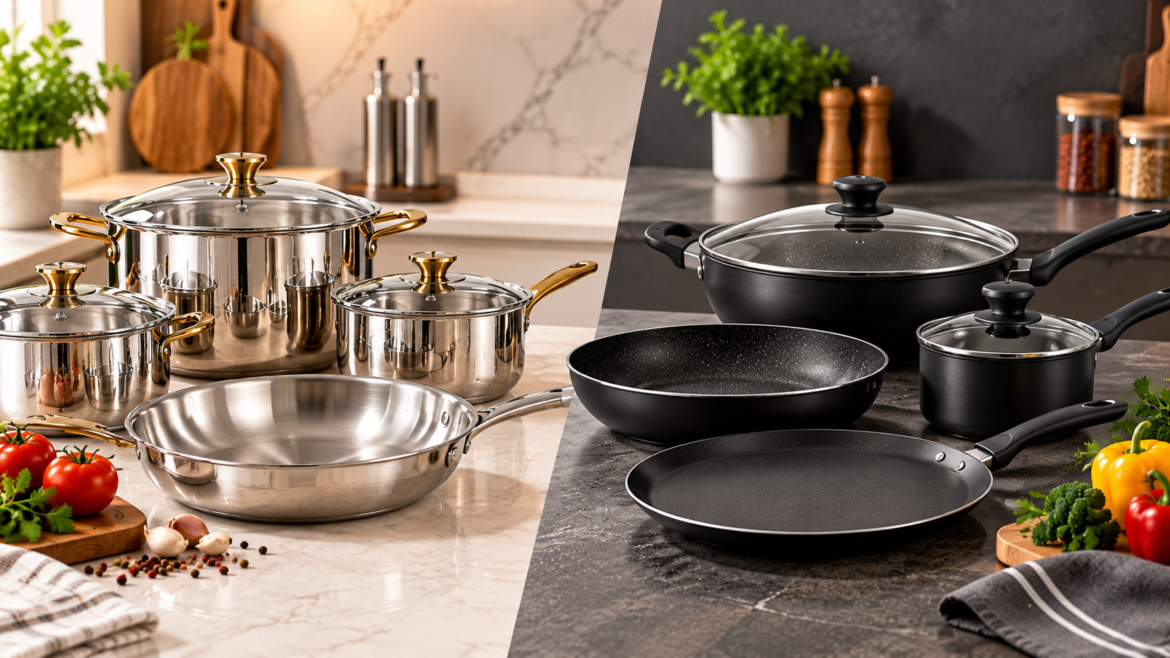
Stainless Steel vs Non-Stick Cookware: Which One Is Right for Everyday Cooking?
Choosing the right cookware can make a significant difference to your everyday cooking experience. With so many options available, stainless steel cookware and non-stick cookware are two of the most commonly considered choices for modern kitchens. Both have their own characteristics, advantages, and ideal uses.
If you are planning to upgrade your kitchen cookware, understanding the differences between stainless steel and non-stick cookware can help you choose products according to your cooking style and requirements. Sorabh Kitchen World offers a range of kitchenware designed to meet the practical needs of everyday cooking.
What Is Stainless Steel Cookware?
Stainless steel cookware is made primarily from stainless steel and is widely used for cooking a variety of dishes. It is known for its strength, polished appearance, and durability.
Stainless steel pots, pans, kadais, handis, and other kitchen utensils can be useful for preparing everyday Indian meals such as vegetables, curries, rice, dal, gravies, and more.
One of the key features of stainless steel cookware is its versatility. With proper care, good-quality stainless steel cookware can remain a useful part of the kitchen for a long time.
What Is Non-Stick Cookware?
Non-stick cookware has a specially coated cooking surface designed to reduce food sticking during cooking. This can make it convenient for preparing foods that are more likely to stick to a cooking surface.
Non-stick pans are commonly used for items such as omelettes, pancakes, dosa, eggs, and other foods where easy release is desirable.
Because the cooking surface is designed to reduce sticking, non-stick cookware can also make cleaning easier after cooking.
Stainless Steel vs Non-Stick: Key Differences
1. Cooking Surface
The biggest difference between the two is the cooking surface.
Stainless steel provides a durable metal cooking surface, while non-stick cookware has a coated surface. Your choice may therefore depend on the type of food you prepare most often.
For high-volume everyday cooking, many households prefer having stainless steel cookware as a versatile kitchen essential.
2. Durability
Stainless steel cookware is generally valued for its durability and resistance to everyday kitchen wear. With appropriate care, it can continue to be used regularly for many years.
Non-stick cookware requires more attention to the cooking surface. Using unsuitable utensils or excessive heat can damage some non-stick coatings, so following the manufacturer’s care instructions is important.
3. Ease of Cooking
Non-stick cookware can be convenient when preparing foods that tend to stick. The smooth cooking surface allows food to be released more easily.
Stainless steel cookware may require proper heat control and cooking techniques to minimize sticking. Once you become familiar with the cookware, however, it can be highly versatile for everyday recipes.
4. Cleaning and Maintenance
Both cookware types require appropriate cleaning and care.
Non-stick cookware is often convenient to clean because food is less likely to stick to the surface. However, abrasive cleaning materials should generally be avoided if they can damage the coating.
Stainless steel cookware can be cleaned using suitable kitchen cleaning methods. Proper maintenance helps preserve its polished finish and overall appearance.
Which Cookware Is Better for Indian Cooking?
There is no single cookware type that is ideal for every recipe. Indian cooking involves a wide variety of techniques, including sautéing, boiling, simmering, frying, and preparing gravies.
For households that prepare different types of meals every day, stainless steel cookware can offer useful versatility. Different sizes of pots, kadais, handis, and pans can be used according to the quantity and recipe.
Non-stick cookware can complement a kitchen by making certain delicate or low-stick recipes more convenient.
This is why many kitchens can benefit from having both stainless steel and non-stick cookware, depending on individual cooking requirements.
Important Factors to Consider Before Buying
Before purchasing cookware, consider the following:
- Cooking requirements: Think about the dishes you prepare most frequently.
- Size: Choose cookware sizes according to your household and serving requirements.
- Construction: Look at the overall build quality, base, handles, and finishing.
- Maintenance: Consider how much cleaning and care the cookware requires.
- Versatility: Select products that can be used for multiple cooking purposes.
- Kitchen setup: Consider the cookware that complements your existing collection.
- Usage instructions: Always follow the manufacturer’s recommendations for safe and appropriate use.
Why Choose Sorabh Kitchen World?
At Sorabh Kitchen World, the focus is on providing practical kitchenware for modern households. From stainless steel cookware to other essential kitchen products, the range is designed to support everyday cooking and serving needs.
Whether you are looking for a durable stainless steel pot, a versatile kadai, or cookware suitable for specific recipes, choosing the right product starts with understanding your requirements.
A well-planned cookware collection can provide greater flexibility and make everyday kitchen tasks more convenient.
Stainless Steel or Non-Stick: What Should You Choose?
The answer depends largely on your cooking habits.
If you are looking for durable, versatile cookware for regular cooking, stainless steel can be a practical choice. If your priority is easy food release and convenient cooking for specific recipes, non-stick cookware may be useful.
Rather than viewing stainless steel and non-stick cookware as direct replacements for one another, consider how each can serve a different purpose in your kitchen.
With the right combination of cookware, you can prepare everything from everyday meals to special dishes with greater convenience.
